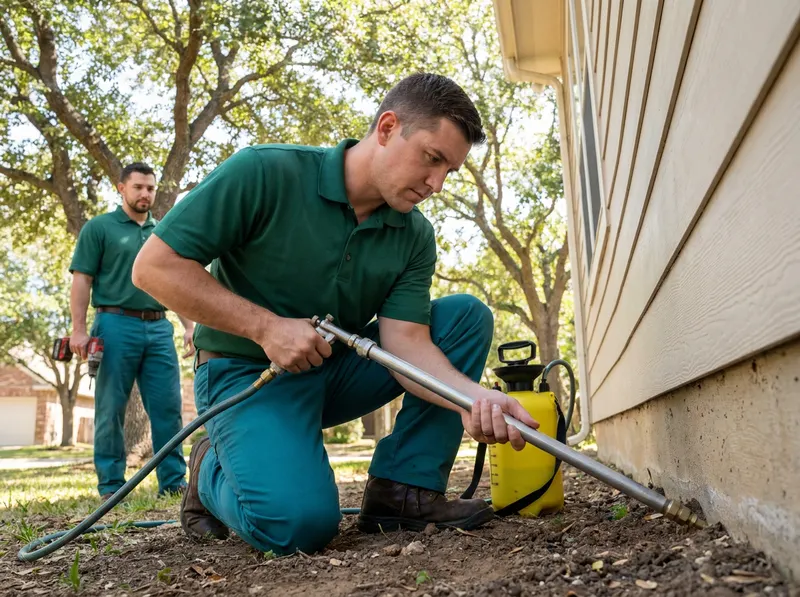
Termite treatment in Keller, TX: liquid barrier and bait options, priced after an on-site inspection. Call InsectOut Pest Control at (817) 309-6740.
InsectOut Pest Control provides Termite Treatment in Keller, TX. Subterranean termites cause the vast majority of termite damage in North Texas, and the clay-heavy soils common across Keller neighborhoods like Hidden Lakes, Marshall Ridge, and Saddlebrook Estates hold the moisture these colonies depend on. The EPA's guidance on termite control identifies two primary professional methods, and InsectOut Pest Control uses both: a liquid termiticide barrier applied to the soil around the foundation, and in-ground bait stations placed on the property perimeter. The right choice depends on the structure, the landscaping, and where activity is found.
A liquid barrier fits a home with an accessible foundation and confirmed active feeding, the termiticide is trenched and rodded into the soil to create a treated zone termites cannot cross, and modern non-repellent products are carried back to the colony by foragers. Bait stations fit homes where trenching is hard (heavy flower beds, wide decks, pools common in Oakmont Hills and The Highlands) or where a homeowner prefers minimal soil disruption; stations use a slow-acting growth inhibitor the colony shares until it collapses. The trade-off is pace against disruption: a liquid barrier works fast and protects a defined zone, while bait works more gradually across the whole foraging range with less digging. Both approaches, applied correctly, are recognized by the USDA Natural Resources Conservation Service soil-condition context that drives termite pressure in the Cross Timbers region this part of Tarrant County sits in.
How the process runs: Step 1, the technician inspects the slab, weep holes, crawl space, and any wood-to-soil contact, checking for mud tubes and the discarded wings swarmers leave on windowsills each spring. Step 2, the species and activity level are confirmed, Eastern subterranean termites, per Texas A&M entomology records, swarm here mostly from February through May after warm rain. Step 3, a written plan names the method, the product, and the treatment zones. Step 4, the barrier or bait is applied. Step 5, follow-up monitoring verifies the colony is gone and the perimeter stays protected. Homeowners in Bloomfield Estates and Woodland Estates often ask about safety first: federal pesticide-handling standards and the product label, which carries the force of law under EPA pesticide registration, govern how and where termiticide is placed, and treated soil is sealed under the slab and backfill, not left exposed in living areas.
Termite treatment is not the same as general pest control, and the distinction matters before paying for either: a quarterly roach-and-ant service does nothing to stop a termite colony eating structural wood below the slab. Catching activity early is why the National Association of Home Builders and most lenders ask for a termite inspection at resale across neighborhoods like Harmonson Farms and Keller Oaks. If swarmers appear indoors, if mud tubes climb a foundation wall near the Big Bear Creek Greenbelt drainage, or if a porch post sounds hollow, those are signs of an active colony, not a passing nuisance. Further reading on identification is available from university extension entomology and professional pest-control industry references.
Every job gets a firm, written price after an on-site visit.
Tell us about your termite treatment job in Keller and we'll send a clear, written quote, usually the same day.
 InsectOut Pest Control